



Rieko Kodama – Part VI: The status of women in the Japanese video games industry

Table of contents:
Part I: Tokyo, 1984
Part II: Champion Boxing
Part III: From arcade to console (and vice versa)
Part IV: Alex Kidd in Miracle World or the birth of a Master System icon
Part V: Breaking out of the canon to go beyond it: the making of Phantasy Star
Part VI: The status of women in the Japanese video games industry
Part VII: Change and new responsibilities
Part VIII: The two Phantasy Star II
Part IX: Working conditions at Sega and in the Japanese video game industry
Part X: A mascot in the making
Part XI: On both sides of the Pacific
Part XII: Final Phantasy
Part XIII: The last Saturn games
Part XIV: Arcadia of my youth
Part XV: Entering History
Games
To be confirmed
Other video game related works
Chronology
Gallery
Sources
General sources (Interviews, liner notes, comments, etc.)
Article aussi disponible en VF
Hoshi o Sagashite…
In the 80s, Yu Suzuki’s games helped to inspire a host of future programmers, designers and musicians in the industry. When Space Harrier came out at the end of 1985, Miki Morimoto was one of those people who decided to apply to Sega after trying out its arcade game. She began by playtesting a number of titles, earning the pseudonym Gamer Miki in the process, before taking on various tasks on Phantasy Star, from balancing to writing messages and assigning values to items and enemies (which earned her credit as ‘assistant coordinator’, the same title as that of scriptwriter Chieko Aoki). She then submitted her first project as a director: Hoshi o Sagashite…, an adventure game released in 1988 but never marketed outside Japan. Miki Morimoto thus became the second known woman to direct a game at Sega, and more specifically at the R&D2.
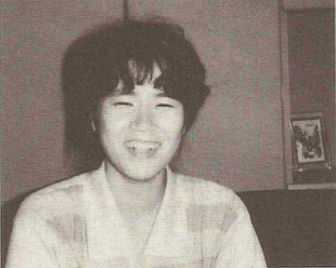
Miki Morimoto (circa 1993)
At this point in the story, we can begin to wonder whether Sega was a company that was more open to women than the average. For a company to have a female director in its ranks was already rare in 1988; for it to have two, and in the same department at that, was exceptional.
If we focus on the development side, Japan seems to have long had a higher proportion of women than the rest of the world, particularly in the positions of composer and graphic designer. This was the case, for example, at Namco, Konami, Hudson Soft and, above all, Capcom, where both sound departments (arcade and consumer) were headed by women in the late 1980s. However, this phenomenon was not as prevalent in certain companies, notably Nintendo, where women were almost entirely absent (composer Soyo Oka did not make her debut there until 1987), and Compile, which had only one woman among its twenty or so employees at the time. Game design and programming, which were often linked in the 1980s, were generally reserved for men.
Among other major players in the industry, SNK was one of the few known to give a woman – Keiko Tanaka – the opportunity to direct her first game, Paddle Mania, in 1988, three years after she started as a graphic designer. However, as her former colleague Hiroko Yokoyama pointed out, this did not seem to happen without difficulty. Some male employees of her company resented the fact that women were given the opportunity to perform tasks that they would have liked to have been assigned, to the point of harassing them.
Another female director identified from this period include Reiko Oshida, co-creator of Battle of Olympus in 1988, while Keiko Itoh is credited as producer and screenwriter on Enix’s Angelus (1988) and Misty Blue (1990).
The Japanese directors who preceded Chieko Aoki and of whom we are aware to date can be counted on the fingers of one hand. The first is Kotori Yoshimura, designer of games such as 2001-Nen Uchū no Tabi, the unofficial adaptation of 2001: A Space Odyssey released in 1980, Thunder Force in 1983 and Plazma Line in 1984, one of the very first, if not the first, polygonal 3D computer game. The second, Rika Suzuki, co-founded her own company before directing Murder Club in 1986. The third is an equally interesting case, even if her career was so brief that she is virtually unknown to the public today, when she is not confused with her former colleague Kazuko Shibuya. Miki Yukinoura joined Square as a graphic designer in 1984, when the company started developing games, and became head of the planning department 2 years later. She wrote the script for Alpha (1986) before directing her first game: Apple Town Monogatari, an adaptation of Little Computer People released in 1987 on the Famicom Disk System. She’s also the one who invited her friend, composer Nobuo Uematsu, to work for Square, thus launching his career in the video game industry.
Yukinoura’s case is a good illustration of the fact that there are huge gaps in information about this era, even for companies as well-known as the one she worked for. The research work of historians such as Zekuu has brought to light some of the pioneers of the industry, particularly at Namco, where we have recently discovered artists such as Atsuko Sugisaki and Mayumi Akiyama, respectively graphic designer and illustrator on Dig Dug, to which we can add Xevious composer Yuriko Keino, all hired between 1980 and 1982. This work, coupled with the online availability of scans of magazines from the period, should nevertheless make it possible to gradually fill in some of these gaps and, perhaps, discover other female pioneers of the industry.
In 1988, Sega had a number of women in various development positions, including scriptwriters and game designers (Chieko Aoki, Miki Morimoto), composers (Chikako Kamatari, Izuho Numata), a programmer (unidentified) and graphic designers (Rieko Kodama, Yoko Kobayashi, Takako Kawaguchi, Chie Yoshida, Toyonaka Ozaki). The fact that their names are mentioned here should not be misleading: they were clearly outnumbered. However, a whole range of factors meant that some of them were able to work on games developed by teams whose composition respected or approached gender parity. This is presumably the case with Tensai Bakabon (3 women out of the 6 known developers), Alex Kidd in The Enchanted Castle (3 women out of the 4 known developers by my reckoning) and it’s probably also the case with Nazca ‘88 which, even at the time of its release, had the reputation of having been developed by a more female than average team (the only two identified developers are Chieko Aoki and Chikako Kamatani).
If we focus on the graphics, we realise that some teams are predominantly female, whether on Alex Kidd in Miracle World, Hoshi o Sagashite…Phantasy Star II, Kujaku Ou 2: Geneijou, Sorcerian or even the first Sonic. According to Toru Yoshida, who joined Sega as a graphic designer in 1988, there were as many women as men in the R&D 2 design department, and this was also the case at Hudson Soft according to Hiromasa Iwasaki, a freelance developer who worked with the company famous for Bomberman for many years before becoming a historian specialising in its history.
At the time, Sega’s development branch was still divided into 2 sections: the R&D1, which focused on arcade games, and the R&D2, which was still modest in size. When they joined Sega, new recruits began by taking a tour of these two sections and then indicated which one they wanted to work in. The R&D1 then had a succession of games developed mainly, if not exclusively, by men, which meant that a gap may have developed between the two sections, with some female newcomers not necessarily wanting to work surrounded solely by men. In addition, as both Aoki and Morimoto were scriptwriters, games produced for the console market had an added appeal compared to the arcade market, where story-driven games were pretty much non-existent.
Another important point concerns the composition of the teams: developers were given a great deal of freedom, and Naka himself said that he went looking for Naoto Ohshima for Phantasy Star II and then Hirokazu Yasuhara for Sonic. This means that development teams could be put together according to needs, schedules and affinities. What’s more, these teams were made up of 5 to 7 people, which was more than enough to develop games.
Finally, the industry was still in its infancy and many of the developers were very young. Almost all the female developers mentioned above were in the same age bracket and joined Sega around the same time. All these factors were specific to Sega as the company was in the second half of the 80s, and unfortunately the situation didn’t last forever.
The status of women in Japan
In the first half of the 90s, some of the names mentioned above left development, both men and women (Toru Yoshida and Rieko Kodama both reported relatively high turnover at Sega), but not to the same extent. Izuho Numata and Kazuo Yamada changed careers, one joining a biological laboratory while the other set up his own accounting firm, while Takako Kawaguchi left Sega with her husband and colleague around 1995-96. But there is one essential point that distinguishes men from women in Japan: women often ended their careers after getting married. While we don’t know what happened to Yoko Kobayashi, we do know that Chieko Aoki and Toyo Ozaki left the industry after each marrying one of their colleagues.
In addition to the social pressure to marry young and start a family, until 1986 there was still a legal obligation that supported this discrimination. Japanese law allowed companies to make women sign an employment contract stipulating that they had to leave their job when their first child was born. New legal provisions on equal opportunities for men and women were passed in 1986, but many companies circumvented them by inserting new clauses in their contracts, which in practice meant having to choose between having a family or prioritising one’s professional career. It was not until 1999 that a new law put an end to these practices.
In addition to local customs and other legal obligations creating gender disparities, there was also a lack of consideration for women. Before joining SNK, Hiroko Yokoyama said she was the first person her former company fired around 1986; she was chosen over another employee on the pretext that once women are married, they no longer need to work. The video game industry was in its infancy at the time, and some companies seemed to have accepted that it was a male-dominated environment, which probably justified the fact that the toilets were unisex by default (they were not so much gender-neutral toilets as men’s toilets that women could use). When Namco moved its headquarters in the early 1980s, it was not deemed necessary to build women’s toilets, something that was already lacking in its old building and which, according to Yokoyama, was not specific to this company. When she joined a company as a graphic designer, her first task was to make coffee for her colleagues, remembering how much sugar and milk each of them wanted, which took her an hour a day. Again, on the pretext that women leave their jobs once they get married, she was refused 3D training at Video System in the mid-1990s, as her superior preferred to give priority to male candidates.
Sega, a company apart?
We don’t know exactly what the situation was at Sega, either before or after 1986, but it is possible that its employees benefited from something that was specific to their company: it was a company of American origin that had long been run by Americans or, in the case of Hayao Nakayama, by someone who was open to American culture. Although the United States was not exactly exemplary in terms of parity, it was ahead of Japan in this respect, if only in terms of legislation, and this may have influenced Sega’s successive directors. Over the years, Kodama has had the opportunity to speak out on the issue of gender discrimination on several occasions, although she has always been questioned in her capacity as an employee of Sega:
‘I don’t know if it’s due to Sega’s corporate culture, but I’ve never felt at a disadvantage because I’m a woman. I’ve been working on various things related to game development for over 30 years now, and since joining Sega I’ve never been treated differently from men.’
‘They’ve always given me the freedom to make the games I wanted, and while there have been both successes and failures, they’ve never failed to approach me about doing another project, and I’m very grateful for that. They don’t discriminate against their workers for their gender or their seniority either, which I am also extremely grateful for.’
There is, however, another factor to consider: Sega remains a company based in Japan. Attitudes and traditions don’t change overnight and, even if there was no contractual obligation, it’s likely that many women left their jobs at a very young age because that’s what was done in their country at the time.
Although this phenomenon is tending to diminish, it has contributed for decades to widening the gap between the number of men and women working in many companies. This has a huge and lasting impact on any hypothetical attempt to establish gender parity, both in terms of the average length of women’s careers in the video games industry and in terms of their access to positions of responsibility, which is generally conditional on seniority. Furthermore, the size of development teams has continued to grow as a result of technological developments and the growing needs they have brought with them, but for all the reasons given above, the proportion of women in each team has not really increased. As a result, it’s probably easier to find 3 women within a company to develop a game with a team of 6 than to find 100 to develop a game with a team of 200.
To our knowledge, Hoshi o Sagashite… is the only adventure game Rieko Kodama worked on. In 1999, she cited Hokkaidō Rensa Satsujin: Okhotsk ni Kiyu (1984), the sequel to Portopia Renzoku Satsujin Jiken, as one of her references in story-based games. Along with Kujaku-O / Spellcaster a few months later (September 1988), it is one of the last known Mark III games she worked on as a graphic designer.
As for Miki Morimoto, she made a name for herself again by directing the Mark III adaptation of Ys (1989), co-writing the Mega Drive adaptation of Sorcerian (1990), and then working at Sega-Falcom on the adaptation of other Falcom titles for Sega consoles. She then followed the same path as Yoshiki Kawasaki years earlier, joining Sega’s marketing department around 1995.

Hoshi o Sagashite…
La-Rie?
While we now know the identities of the people hiding behind certain pseudonyms, others remain a mystery. This is particularly true of La-Rie, a pseudonym that could lead us to believe that it belongs to Rieko Kodama, but she has never publicly confirmed that she worked on any of the games credited to this person, namely the Master System game Poseidon Wars 3D (1989) and the Mega Drive version of Castle of Illusion (1990). The latter, produced in collaboration with Disney, has benefited from several re-releases on Mega Drive and Saturn, as well as a remake produced in 2013, a sign that it has retained a certain popularity and that it would constitute a major title in her ludography.
Page 1 2 3 4 5 6 7 8 9 10 11 12 13 14 15 Sources
———-Support me———-
VGDensetsu is the equivalent of a full-time job for me – I spend an average of 30 to 40 hours a week on it. You can help me continue my work by supporting me financially via Patreon (monthly payment with the possibility of a one-off payment by unsubscribing after an initial payment) or via Ko-fi (one-off payment), or simply by talking about my work to those around you.