



Ayano Koshiro – Part 7: Struggling projects
Table of contents:
Part 1: A family of artists
Part 2: The Falcom years
Part 3: Transition to freelancing and amateur games
Part 4: The birth of Ancient
Part 5: The end of the 16-bit era
Part 6: Entering the era of 3D graphics
Part 7: Struggling projects
Part 8: Gradual departure from development
Sources
Games
Gallery
Article aussi disponible en VF
Streets of Rage 4
Since the mid-90s, the idea of producing a sequel to Streets of Rage 3 was on the minds of many developers at Sega and elsewhere, but it never came to fruition until the version released in 2020.
As early as 1996, Core Design approached Sega with a proposal to develop Streets of Rage 4, but was told that, although the concept was considered interesting, the company already had other ideas for a sequel (to this day, we don’t know if this was actually the case or not). Shortly after this proposal, the same studio released Tomb Raider, propelling it into the spotlight following the success of its game. As for its beat’em up, for a while called Judgment Force, it came out under the name Fighting Force in 1997 and was entirely in 3D. Its Saturn version, although announced, was eventually cancelled.
Sega developed a number of 3D beat’em ups in the second half of the 90s, which followed a similar formula to its 2D games, but with more freedom of movement. These included Die Hard Arcade / Dynamite Deka, SpikeOut and Zombie Revenge. All of them had the distinction of being designed primarily for the arcade market and only later released on consoles (with the exception of SpikeOut), with limited success. It has to be said that the beat’em genre was not at its strongest commercially speaking in the second half of the 90s. It only revived once it had fully embraced 3D and abandoned its 2D camera angles, with titles such as Devil May Cry and Dynasty Warriors 2 / Shin Sangoku Musō, each with its own formula. For his Dreamcast debut, Yuzo Koshiro, who acted as planner on this new project, had a different formula in mind, probably different from what he would have wanted to do with Streets of Rage 3 years earlier.
In 1996, Team Fortress was released, followed two years later by Half Life, two PC FPS games that did not leave the composer indifferent, with the latter even becoming addicted to Valve’s game. Like his sister, who would go on to play World of Warcraft on American servers years later, Yuzo never confined himself to Japanese games, despite the difficulties FPS games faced in gaining popularity on the archipelago. For his planned sequel to Streets of Rage, he decided to turn Team Fortress into a beat’em up, which meant taking inspiration from its first-person view.
The idea of a fighting game adopting this point of view wasn’t entirely new, appearing in 2D titles such as Punch-Out! (1984) and Dragon Ball Z: V.R.V.S. (1993). In 3D, however, it was confined to one-on-one battles and complemented a more traditional profile view, even though an attempt had been made during the development of the first Virtua Fighter (1993). In 1996, the PlayStation adaptation of Tekken 2 brought this experiment to fruition, followed by Bushido Blade in 1997, then Battle Tryst in arcades (although this mode seems to have been unknown to the public for a long time) and the Dreamcast adaptation of Virtua Fighter 3tb (1998). Nevertheless, these modes were often seen as gimmicks that weren’t as easy to get to grips with as a more traditional mode, and had the added disadvantage of being unavailable in versus mode against another human being.
Before embarking on development, and rather than making a playable prototype, Ancient produced a short test video in pre-rendered 3D to give Sega an idea of the concept and convince the publisher to give the project the green light. The video shows several camera angles, including a segment in first-person view, as well as segments opting for a more traditional camera angle. It was Makoto Wada who created this video using Lightwave, presumably with Ayano’s assistance. Wada worked as an editor for a magazine until around 1995, then switched to game development and decided to join Ancient. The first title he is credited with is Hakken!!: Tamagotchi Park for Sega Saturn, on which he worked as a 2D graphic designer. He then joined the team behind Animatic Story Game 1: Card Captor Sakura, but it was Protect Me Knight that made him famous years later.
At this stage of the project, there was still no music, as Yuzo was busy with other tasks. The video was presented to Sega of Japan in 1999, along with design documents, but because of the licence involved, the parent company preferred to consult its American branch. The latter rejected Ancient’s project, meaning that it was abandoned. For a while at least.
Around 1999-2000, Sega decided to get the project back on track, under the supervision of the producer of the first episode, Noriyoshi Ohba. For 6 months, Sega and Ancient worked together on the title, which featured online play, characters designed by Ayano and music by Yuzo, all in 3D (although the camera angle chosen was unknown). Unfortunately, development was not completed and the reason(s) for the project’s cancellation were not disclosed. However, it’s not impossible that it was one of a wave of internally developed titles that Sega cancelled around the same time as the Dreamcast production shutdown was announced.
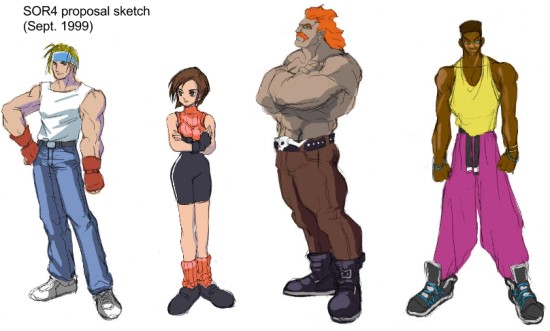
Characters designed in 1999 for the Dreamcast version of Streets of Rage 4. When asked about the authorship of these designs, Ariga and Ayano said they couldn’t remember which of them drew them. While Yuzo has in the past stated that the characters for this game were designed by his sister, it’s not out of the question that the range of playable characters may have changed over the course of the project.
In 2001, shortly after this announcement, Yuzo said in an interview that he hoped to be able to relaunch the sequel project on Xbox (following the example of GunValkyrie, another title started on Dreamcast). His sister, who was also still involved in the project, designed 5 new characters and Ancient was due to present the project to Hitmaker, one of Sega’s semi-autonomous branches. A few months later, it was done, and the composer confirmed that Hitmaker had approved the project. Questioned again a few months later in March 2002, he indicated that it was only a rumour for the time being.
In January 2003, the presentation video made by Wada a few years earlier was put online on the Tokyopia website via Yuzo, implicitly signifying the burial of the project after nearly 4 years in the making.
Since then, Ancient’s founder has mentioned Streets of Rage 4 several times on Twitter, but the multitude of versions makes it difficult to determine to which one a particular concept or idea belonged. This is particularly true of the character and combo designs dated September 1999: were they conceived at the time of the first presentation or during development in collaboration with Sega of Japan?
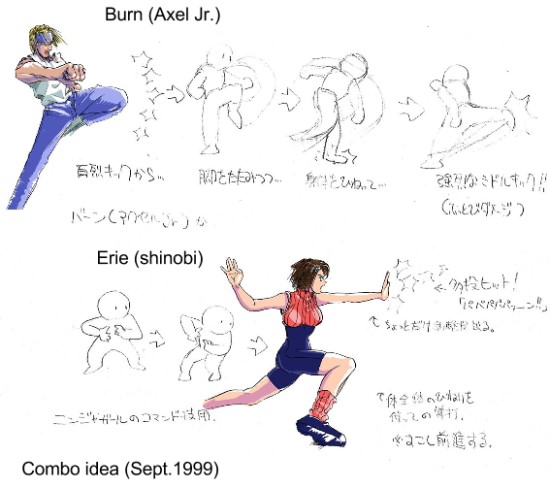
Yuzo: ‘The main character seems to be not Axel but his son. I guess it was set up to be the next generation of Bare Knuckle.’
In 2015, during an interview with some of the Streets of Rage 2 developers, producer Yosuke Okunari went back over how Streets of Rage 4 was still a recurring topic at the time:
‘From the days of the Dreamcast until recently, we had many plans for remakes or new games, and we even had a prototype in the works. From memory, I’ve seen at least three different versions of Streets of Rage 4, and I worked on one of them myself (laughs).’
The project Okunari took part in was to have been released on PS2 as part of the SEGA AGES 2500 range. When he heard about this collection, initially conceived in partnership with D3 Publisher (known for its Simple Series range), he decided to submit a proposal to develop a new episode of Streets of Rage (as well as Dragon Force) and produce it within Sega Wow. However, the titles released in this range between 2003 and 2005 were all low-cost remakes of earlier 2D or 3D titles, and received a mixed critical reception to say the least. Shortly before development began, the project was finally given the Hokuto no Ken license.
Among the aborted projects using the Streets of Rage licence in the years following Ancient’s project were a reboot of Streets of Rage for Xbox 360, PS3 and PC developed by Grin, another reboot by Ruffian Games and Streets of Rage Online by BottleRocket, again for PS3 and Xbox 360.
Culdcept II
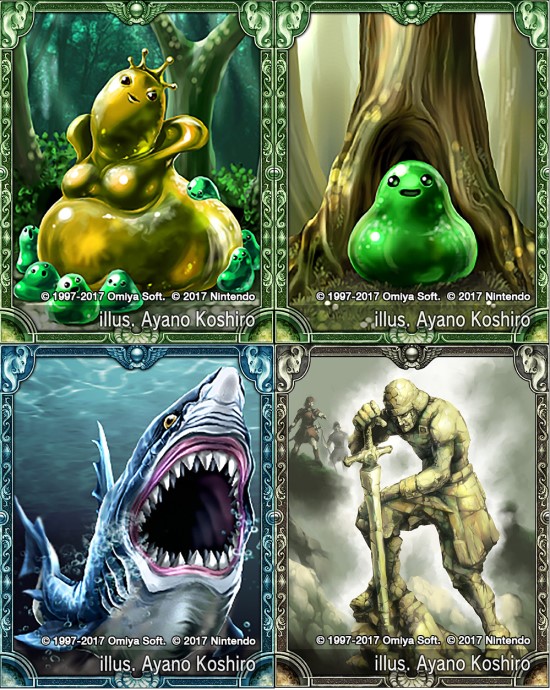
In January 1993, 3 people founded the company Omiya Soft and developed an adaptation of the Falcom game Lord Monarch for Sega. They followed this up with the Super Famicom game Front Mission: Gun Hazard, in which Tomoharu Saitō and Hiroshi Nagai took part as graphic designers. Nagai had known the founders of Omiya Soft even before they set up their company, so it came as no surprise that he regularly contributed to their games. In addition to his work as a graphic designer, he drew numerous illustrations for games and magazines from the early 90s onwards. With Saitō, they created illustrations for Culdcept, a card game whose main illustrator was Naoyuki Katoh, who was also in charge of the backgrounds and box art.
In 2001, a sequel was developed for Dreamcast and the 3 illustrators mentioned above were once again invited to contribute. They were joined by Ayano, who had previously supervised the work of two of them on Streets of Rage 2. However, she didn’t just create the illustrations; she was also responsible for designing the creatures and monsters that appear in them. Note that Ancient had already been involved in the development of the first opus in Omiya Soft’s series, but only on the sound side.
Culdcept II is to date the last known game she worked on without the Ancient studio also being involved. Although some of her illustrations were reused in Culdcept Saga, released on Xbox 360 in 2006, she did not work on the game itself. That same year, Saitō, who remained close to his former colleague Ariga, died of cancer at 38.
Car Battler Joe
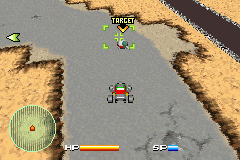
Increasingly taken up by his career as a mangaka, Hitoshi Ariga nonetheless found time to develop a new game with Ancient for what might at first sight appear to be a sequel to Vatlva. At least, that’s what he thought when he started work on Car Battler Joe, a Game Boy Advance game that once again proved to be a mix of genres, combining the mechanics of Vatlva with those of an RPG, offering gameplay phases that are quite distinct from one another. Once again, he was in charge of designing the characters and some of the graphics, drawing the various portraits and animating the main character, again under the supervision of Ayano, who was, as always, art director (as well as graphic designer).
Production deadlines were becoming increasingly difficult for Ariga, who was also working on the manga ‘The Big O’, causing his assistants to break out in a cold sweat. Although he didn’t completely leave the video game industry after that, he never again became as involved in the development of another game.
Ancient obtained a development kit for Game Boy Advance and began development of Car Battler Joe even before the console’s release. Among the graphic designers in charge of the project was one from Seattle – Kevin Chung – which was unusual for a Japanese studio at the time. Given the size of the studio and the 2D training of its graphic designers, the release of Nintendo’s handheld should have been a godsend for Ancient, which could once again launch into the production of a title without depending on other developers. However, although the company indicated that it wanted to make a sequel to Car Battler Joe if it was successful, it eventually released only one game on this console, preferring to focus on other machines. Thus, after making some changes for the release of its game in the USA (released in October 2002, almost a year after the original version), Ancient then turned its attention to another Nintendo console, which nonetheless offered connectivity with the GBA.
Kaiju no Shima: Amazing Island
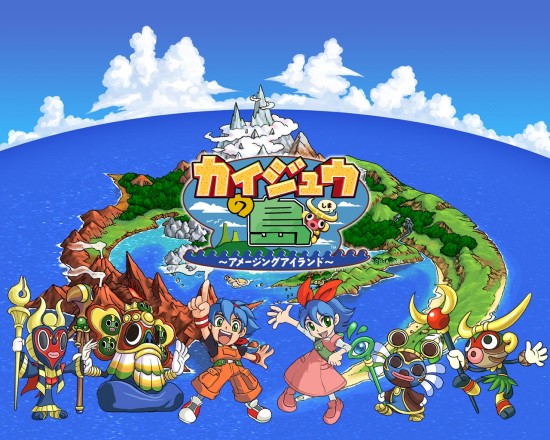
Alternating with all its attempts to produce a new episode of Streets of Rage, Ancient began working on another title in a very different style in the second half of the 90s. These two games alone account for many of the gaps in the studio’s resumé, but one of them still managed to make it to market.
Development of Kaiju no Shima began on Saturn and, according to Yuzo, reached 90% completion on that console, only to come to a halt when the Dreamcast was announced, which would imply that development began in 1997 and came to a halt around the beginning of 1998. However, it probably took some time before the project initiated by the composer was back on track.
In 1999, Professor Takeo Igarashi presented a programme called Teddy, named after the bear he drew to show how his software worked. Teddy made it possible to convert a simple 2D drawing into 3D, a concept that greatly interested Yuzo as well as Sega after the composer gave them a demonstration. The company approved his project and considered turning it into an arcade game, but was reluctant to implement network gaming on such a platform, which was one of the key points of Yuzo’s proposal. Development finally got under way on Dreamcast, with no indication of what had been kept, abandoned or changed since the Saturn version.
Development of this new version, dubbed Monster o Tsukurou! at the time, seems to have been particularly long and to have proceeded at a fluctuating pace. Begun in 1999, it was abandoned in 2002 with the release of the PS2 game Magic Pengel: The Quest for Color, according to Yuzo. However, it’s not impossible that there was some confusion over the dates; most of the games produced by Sega for the Dreamcast, which was at the end of its life by then, had already been abandoned or transferred to another machine. What’s more, Ancient had developed Car Battler Joe in the meantime.
In any case, in Magic Pengel as in Kaiju no Shima, the player draws monsters and brings them to life on screen. Since the release of Pokémon, a number of titles aimed primarily at young audiences and featuring battles between monsters have been developed. Finding a selling point that would set them apart from the competition could prove difficult. Yuzo described the project as experimental and proceeded by trial and error, working on the game as a producer and leaving the music to others. For a while, he sought to make his game playable online, but this would have required ongoing collaboration with Sega to determine and manage the online hosting system.
As a result, the Dreamcast version of Kaiju no Shima was aborted almost 70% of the way through development.
Finally came the GameCube version, developed in collaboration with Hitmaker, a branch of Sega with which Ancient had already worked on Streets of Rage 4. This version, which also incorporates the Teddy program, allows players to connect their GBAs and have their creatures battle it out in multiplayer mode. At the time, GBA-GameCube connectivity was heavily promoted by Nintendo as a selling point to enable its home console to stand out from the competition, even though this feature rarely went beyond being an expensive gadget.
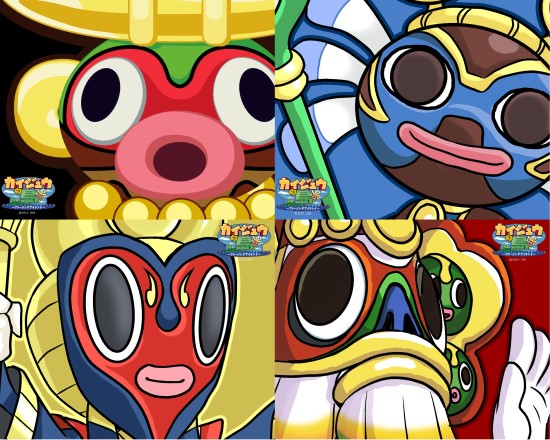
Visually, Ancient’s title is essentially in 3D, and Ayano was in charge of the art direction as well as the in-game illustrations. It was she who opted for an overall southern-inspired design, incorporating influences from Papua New Guinea, Africa, South America and, a little further north, Native American masks. Since the development of Story of Thor, she had tried to incorporate this type of influence into her designs, but was systematically vetoed. She did, however, have to revise her first design drafts for Kaiju no Shima, as they were deemed too frightening for children. While the monsters’ designs stood out, the overall art direction was very conventional compared with The Legend of Zelda: The Wind Waker, which had a similar maritime setting. On its release, Ancient’s game struggled to make a name for itself, even though the GameCube did not shine in terms of the number of games developed for it.
———-Support me———-
VGDensetsu is the equivalent of a full-time job for me – I spend an average of 30 to 40 hours a week on it. You can help me continue my work by supporting me financially via Patreon (monthly payment with the possibility of a one-off payment by unsubscribing after an initial payment) or via Ko-fi (one-off payment), or simply by talking about my work to those around you.