






Anecdotes on SNK’s hardware from the 1990s
(Aussi disponible en français)
For the past few years, a former SNK hardware engineer has been sharing a wealth of previously undisclosed information on Twitter about SNK machines and accessories produced in the 1990s—and even slightly earlier. Here is a brief summary.
While the Neo-Geo was originally designed by Eiji Fukatsu of ADK (based on the hardware used for the 1987 arcade game Time Soldiers), SNK later brought much of its hardware development in-house.
The first task assigned to this SNK engineer was the design of the MV-2, a derivative of the MVS system featuring two cartridge slots. (Models with four or even six slots already existed, but the success of SNK’s 2D fighting games arguably diminished the value of having so many slots, as each new release tended to overshadow its predecessors.)
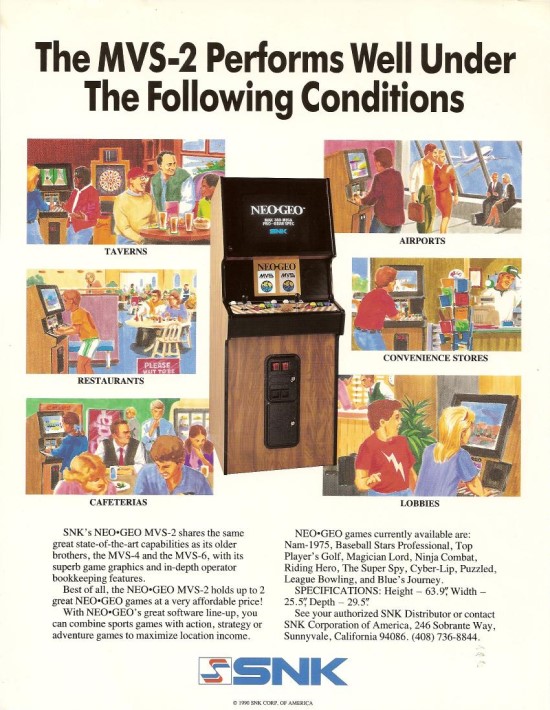
An American ad for the MV-2 (or MVS-2)
During his time at SNK, the training for new recruits involved analyzing digital clocks and designing their circuitry. Since only standard logic IC (integrated circuits) were permitted, engineers had to devise ways to minimize the total number of components.
Neo-Geo CD
The former SNK employee is quite critical of the Neo-Geo’s hardware. The absence of DRAM was such a significant issue that he nearly told his management that the Neo-Geo CD project—which was built upon the existing Neo-Geo hardware—was unfeasible. To develop this new console, he was tasked with modifying the original hardware, which necessitated a revision of the ASIC. (According to him, this revision was later incorporated into both the AES and MVS systems.) He also studied competing hardware, including Sega’s Mega-CD.
The Neo-Geo CD was essentially designed by just two people: this hardware engineer and a programmer in charge of the software (BIOS, etc.)—a remarkably small team. The controller was outsourced, and its thumbstick was designed to circumvent Nintendo’s patent on the D-pad (as was the case with most console manufacturers at the time). The design of the console’s casing was likely outsourced as well.
In the mid-90s, SNK had at least three different hardware projects underway: the Neo-Geo CD, the Hyper NeoGeo 64, and the Neo-Geo 2. The latter never progressed beyond the hardware development phase and was eventually abandoned as the Hyper NeoGeo 64 project moved forward. One of the engineer’s colleagues had drafted the structural schematics for the hardware, but it went no further.
Around 1995–96, SEGA and SNK formed a kind of partnership and began researching “quadrilateral texture mapping” using Nvidia’s NV1 chip. Sega’s Model 1 and 2 arcade boards, as well as the Saturn, already used quads for their polygons, whereas Sony—along with most of the competition—had opted for triangles for the PS1.
Hyper NeoGeo 64
For the Hyper NeoGeo 64, this engineer oversaw the overall hardware design, the specifications for the 2D components, and a significant portion of the 3D components.
For the 2D side, his main inspiration was Namco’s System II (1987), though he also drew influence from other manufacturers, such as Taito.
To test the machine’s 2D capabilities, programmers developed several prototypes, including a F-Zero-style game and an adaptation of Space Harrier that reused graphical assets from the X68000 version.
As for the machine’s sound system, the engineers left this aspect until the very last minute. SNK initially approached Yamaha—whose chips were already powering the Neo-Geo—but the costs quoted by the company for new chips and the development of the necessary software tools were deemed exorbitant. In fact, SNK staff became so frustrated that they resolved to remove anything bearing the Yamaha logo from their hardware. Consequently, SNK turned to Akai, opting to use the chip found in their S3000 samplers. The engineer visited Akai’s offices—located near SNK’s own—and the negotiations proved successful.
Regarding the design of the graphics, Iori Kunifusa, who joined SNK in 1995, explained that he modeled several characters for Samurai Shodown 64 (Haohmaru, Nakoruru, Hanzo, and Poppy), while a more senior colleague handled the textures. The veteran SNK artists lacked formal 3D training, so they engaged in a knowledge exchange: the new hires taught the veterans 3D, while the veterans, in turn, trained the newcomers in 2D art.
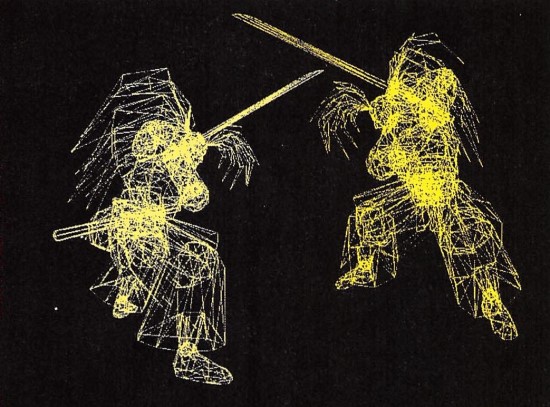
A wireframe model of Haohmaru – the first image released by SNK for Samurai Shodown 64
The engineer complained repeatedly that the programmers of Samurai Shodown 64 were not taking the machine’s limitations into account, resulting in an outcome that made him wince.
4-player adapter
Work on the Neo-Geo was not entirely finished, as SNK’s hardware department was tasked with developing a 4-player adapter for Super Tag Battle (1996). The hardware engineer approved a design that had been worked on by a less senior colleague. Unfortunately, a misunderstanding occurred: he interpreted the value “330” as 33 Ω, whereas 330 Ω resistors had actually been installed—the resistor values in the final schematic had been changed without his knowledge—which led to malfunctions during “mass” production. Consequently, he had to travel to the factory to have the components replaced. Ultimately, the accessory was never brought to market (it is an understatement to say that Super Tag Battle was not produced in large quantities. Rumors regarding the possible inclusion of a 4-player mode in Neo-Bomberman (1997) were circulating prior to its release, but very little is known about the game’s development).
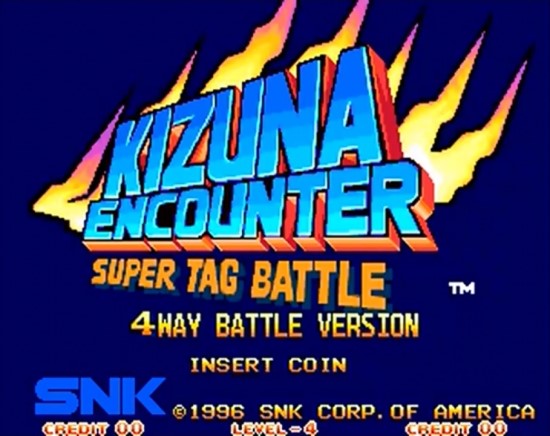
Title screen of the Western version of Kizuna Encounter: Super Tag Battle, featuring a message indicating that a 4-player mode is available.
NeoGeo Pocket
Although SNK did not actually develop any software for the Game Boy, the company had reached an agreement with third-party publishers, granting them access to the technical specifications of Nintendo’s console. According to the SNK engineer, these specifications proved invaluable during the development of the NeoGeo Pocket. When development of this handheld console began, the Game Boy was naturally the primary source of inspiration, even though the goal was to improve upon it in various areas.
The development timeline was extremely tight; while the SNK engineer designed a portion of the circuitry, he left the company before the hardware was finalized.
Bonus
Regarding Beast Busters (1989), he mentioned that the game remained in production until around 1995 and was a major success, predating the launch of the Neo-Geo. Graphic artist Yujiro Hayami (who worked on KOF ’94 through ’98) added that an SNK executive once told him the game had saved the company.
The developers used the same circuit boards as those found in consumer-market Neo-Geo units, though they had to remove the CPU and make modifications to connect an in-circuit emulator (ICE).
Old arcade cabinets—stripped of their internal components—were considered little more than clutter; one could simply ask to take one home.
An SNK engineer once met an employee from NEC who claimed to be developing a console—distinct from the PC-FX—in the mid-90s. The project was reportedly overseen by this same employee, though no further information on the matter ever surfaced.
Sources
Neo-Geo and Time Soldiers
https://www.beep-shop.com/column_entry/69702/
MV2
https://x.com/o_kiti_mai/status/1930290700698169568
Formation
https://x.com/o_kiti_mai/status/1677794020129669121
Neo-Geo CD
https://twitter.com/o_kiti_mai/status/1811383174922170404
https://twitter.com/o_kiti_mai/status/2101145854463844844
https://twitter.com/o_kiti_mai/status/1811381899866390982
https://x.com/o_kiti_mai/status/2108847662493790451
https://x.com/o_kiti_mai/status/2115374459733623276
Neo-Geo 2
https://x.com/o_kiti_mai/status/2108506392688840942
SNK and NVidia
https://x.com/o_kiti_mai/status/2121426518312366184
Hyper Neo-Geo 64
https://x.com/o_kiti_mai/status/1977599772988215478
https://x.com/o_kiti_mai/status/1809336642236477455
https://x.com/o_kiti_mai/status/2108665268906160374
https://x.com/o_kiti_mai/status/1827627972779503721
https://x.com/o_kiti_mai/status/1809515460586598633
https://x.com/o_kiti_mai/status/1977608151181799833
https://x.com/o_kiti_mai/status/1809515963035095041
Samurai Shodown 64
https://x.com/kunifusa/status/1939441574322287102
4-player adaptater
https://x.com/o_kiti_mai/status/2103564440096632981
https://x.com/o_kiti_mai/status/1977461327452098781
NeoGeo Pocket
https://twitter.com/o_kiti_mai/status/1610615259018166273
https://twitter.com/o_kiti_mai/status/2107802302308618627
https://x.com/o_kiti_mai/status/2107940893760311463
https://x.com/o_kiti_mai/status/2108530235365060720
https://x.com/o_kiti_mai/status/2109254162483736832
Beast Busters
https://x.com/o_kiti_mai/status/2113964584864485853
https://x.com/hayamiu/status/2114082934600913384
https://x.com/o_kiti_mai/status/2114096459314610655
Misc
https://twitter.com/o_kiti_mai/status/1837788189316338103
https://twitter.com/o_kiti_mai/status/1616666522059173888
NEC
https://x.com/o_kiti_mai/status/1916072140748788070