






Takako KAWAGUCHI / 川口貴子, AKA Choko / ちょう子
Profile (aussi disponible en français)
Games
Other video game related works
Gallery
Related companies:
Sega
Profile
Takako Kawaguchi joined Sega in the mid-80s as a graphic designer, working mainly on console games. Her first known game was the Mark III version of Fantasy Zone, released in June 1986, on which she was credited under what was to become her usual pseudonym: Choko. At the time, the company had other graphic designers in its consumer division, but Kawaguchi quickly became the best known of them, although this was not really related to her main work. Towards the beginning of summer 1986, Sega made a change in its marketing strategy and in its relationship with its consumers. This resulted in 2 things: Joy Joy News, a small promotional brochure indicating future games to be released on its consoles, and Joy Joy Telephone, a voice mailbox enabling Japanese consumers to find out about the release dates of these same games. This telephone service, similar to that found in other companies such as Nintendo, outlived Joy Joy News and remained in operation until Sega switched completely to the Internet, around the time of the Dreamcast’s release.
Kawaguchi was the first Sega employee to lend her voice to this service, and although she only did so for about 2 years, she did, willy-nilly, make a name for herself with an audience that was then largely made up of children. More than 35 years later, we still regularly see messages on Twitter referring to her by the title by which she called herself – Choko Onee-san (ちょう子お姉さん / big sister Choko).
In addition to being, in a way, the voice of Sega, this particular position led to a photo of her being published 3 times between 1986 and 1987 in the generalist (if not pro-Sega) video game magazine Beep! at a time when the company’s other developers had no opportunity to appear in magazines or give interviews (communication with the press was still essentially handled by department heads). Nevertheless, Kawaguchi didn’t really have the opportunity to talk about her work, and it’s not impossible that these various appearances were simply the result of a desire on the part of the specialized press at the time to publish photos of young women with a connection to the video game industry (including receptionists and models at trade shows).
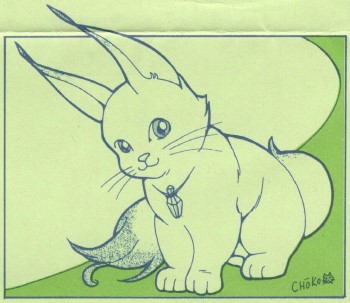
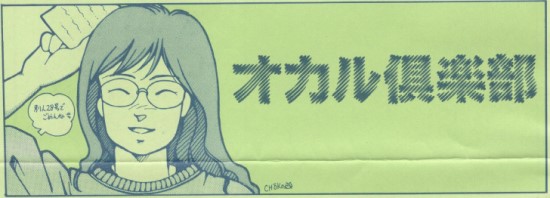
Despite this relative popularity at local level and a career spanning almost 10 years at Sega as a graphic designer, Kawaguchi remains virtually unknown in the rest of the world, probably because she has had little or no opportunity to be as involved as some of her colleagues in some of the company’s games most regularly revisited by the public. For example, her involvement in the first episode of Phantasy Star seems to be limited to the design of one character – Myau – even though, like her colleagues Chieko Aoki and Miki Morimoto, she made a cameo in the game. The extent of her involvement in the second episode is not known – she is credited as a designer. Despite the various interviews and round table discussions held on the first four episodes of the series, many of which took place while she was still working at Sega, she has never taken part in any of them. She occasionally expressed herself through her pencil or her words in the SPEC newsletter in 1989, but much less frequently than some of her colleagues. Her only known illustrations are those published in SPEC, while Myau is currently the only character known to have been designed by her.
It seems that she left Sega around 1995-96, probably at the same time as her colleague and husband Hiroyuki Kawaguchi. While he went on to work on other video games, notably with former colleagues at Artoon, there is no indication that his wife also pursued her career as a developer.
Sources:
The Hokuto no Ken manual (released July 1986 on Mark III) appears to be the first to feature an ad for the Joy Joy Telephone. The first issue of Joy Joy News is dated August 1986 (although it may have been published earlier).
Married to graphic designer Hiroyuki Kawaguchi
https://x.com/Mazin__/status/40445038668292096
Information on how the Joy Joy Telephone service worked
https://untitledz.blog.fc2.com/blog-entry-503.html
Games (in alphabetical order)
Astérix (Master System – 1991)
Artist (Source: in-game credits, as Cyouko)
Astérix and the Secret Mission, AKA As Aventuras da TV Colosso (Master System – 1993, Game Gear – 1994)
Artist (Source: in-game credits, Choko)
Castle of Illusion Starring Mickey Mouse (Master System, Game Gear – 1991)
Character Design (Source: in-game credits, as Cyouko)
Dr. Robotnik’s Mean Bean Machine (Game Gear – 1993, Master System – 1994)
Designer (Source: in-game credits, as Choko)
Fantasy Zone / ファンタジーゾーン (Master System – 1986)
Design (Source: in-game credits, as Choko)
Fighters Megamix / ファイターズ メガミックス (Saturn – 1996)
Graphic design (Source: in-game credits)
Fighting Vipers / ファイティングバイパーズ (Arcade – 1995)
Background design (Source: in-game credits)
Fighting Vipers / ファイティングバイパーズ (Saturn – 1996)
Assistant graphic designer (Source: in-game credits)
Galaxy Force / ギャラクシーフォース (Master System – 1989)
Assistant designer (Source: in-game credits)
Golden Axe Warrior (Master System – 1991)
Designer (Source: in-game credits, as Chouko)
Kujaku Ou 2: Geneijou / 孔雀王2 幻影城, AKA Mystic Defender (Mega Drive – 1989)
Graphic design (Source: in-game credits, as Choko)
Kuni Chan no Game Tengoku / クニちゃんのゲーム天国 (Game Gear – 1991)
Graphic design (Source: in-game credits, as Choko)
Land of Illusion Starring Mickey Mouse, AKA Mickey Mouse no Mahou no Crystal / ミッキーマウスの魔法のクリスタル (Master System, Game Gear – 1993)
Artist, Background Artist (Source: in-game credits, as Choko Kawaguchi)
Legend of Illusion Starring Mickey Mouse, AKA Mickey Mouse Densetsu no Oukoku / ミッキーマウス 伝説の王国 (Game Gear – 1995, Master System – 1998)
Artist (Source: in-game credits)
Phantasy Star / ファンタシースター (Mark III – 1987)
Character design: Myau (Source: in-game credits, as Myau Choko + mentioned in an interview wit Rieko Kodama)
Phantasy Star II / ファンタシースターII 還らざる時の終わりに (Mega Drive – 1989)
Designer (Source: in-game credits, as Choko)
Pyramid Magic / ピラミッドマジック (Mega Drive – 1991)
Character Design (Source: in-game credits, as Choko)
Shadam Crusader: Harukanaru Oukoku / シャダム・クルセイダー ~遙かなる王国~, AKA Defenders of Oasis (Game Gear – 1992)
Graphic Design (Source: in-game credits, as Choko)
Shadow Dancer: The Secret of Shinobi / シャドーダンサー ザ・シークレット・オブ・シノビ (Mega Drive – 1990)
Animal Design Check (Source: SPEC 7)
Sonic Drift / ソニックドリフト (Game Gear – 1994)
Designer (Source: in-game credits, as Choko)
Sonic the Fighters / ソニック・ザ・ファイターズ (Arcade – 1996)
2D Graphic, Model Design (Source: in-game credits)
Sorcerian / ソーサリアン (Mega Drive – 1990)
Graphic Design (Source: in-game credits, as Choko)
Super Wonder Boy – Monster World / スーパーワンダーボーイ モンスターワールド, AKA Wonder Boy in Monster Land (Mark III – 1988)
Graphic design (Source: according to Noriyoshi Ohba, the graphic design team was composed of 7 female designers. I assume that all the female graphic designers working in Sega’s consumer division at the time worked on the game)
Tensai Bakabon / 天才バカボン (Mark III – 1988)
Art (Source: in-game credits, as Choko)
The Black Onyx / ザ・ブラックオニキス (SG-1000 – 1987)
Art Director (Source: in-game credits, as Choko)
Other video game related works
Joy Joy Telephone / ジョイジョイテレフォン (1986 – ~1988)
Voice (Source: Beep! November 1986, December 1986 and October 1987 issues + SPEC #2)
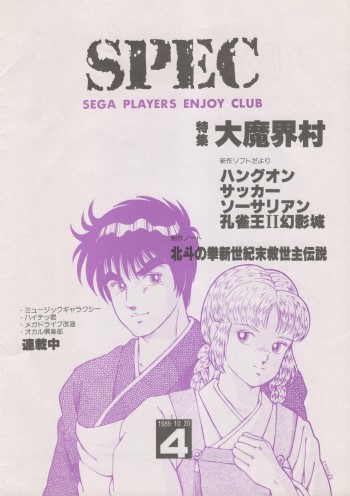
SPEC issues 3 and 4 (Sega’s newsletter – 1989)
Illustrations (Source: credited in each issue as Choko)
Gallery
SPEC